
- Jijo George
- 710
-
Gadgets and Devices
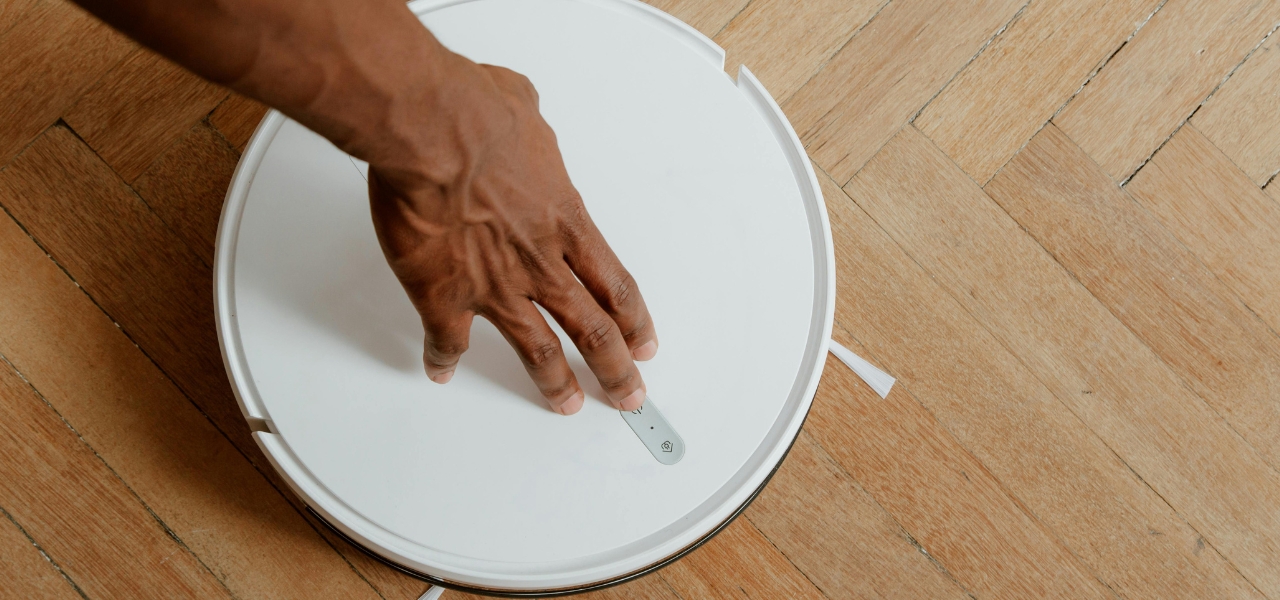


The first generation of home automation focused on scheduled tasks and remote connectivity. In 2026, the paradigm has shifted toward Physical AI and General Purpose Robotics. We are moving away from single-purpose appliances toward a unified ecosystem of autonomous agents. Integrating these innovative tech gadgets into a household workflow requires an understanding of edge computing, spatial awareness, and semantic mapping.
Domestic Robotics 2.0 is defined by the transition from heuristic programming to neural motion planning. Traditional robotic vacuums relied on LIDAR to build 2D maps. Current innovative tech gadgets utilize Visual Simultaneous Localization and Mapping (VSLAM) paired with Transformer-based vision models.
This allows a robot to recognize not just an obstacle, but the specific context of an object. A robotic arm integrated into a kitchen workflow can now distinguish between a fragile wine glass and a ceramic mug, adjusting its end-effector pressure accordingly. To integrate these tools, homeowners must establish a robust Wi-Fi 7 or Thread-based mesh network to handle the high-bandwidth data transfers required for real-time spatial processing.
The primary barrier to a cohesive robotic workflow has historically been fragmentation. The maturation of the Matter protocol has solved this. When selecting innovative tech gadgets, technical compatibility is no longer about the brand ecosystem but the communication layer.
An authoritative home setup now utilizes a local AI controller. This acts as the “brain” for various sub-systems. For example, when a laundry robot completes a cycle, it communicates via the Matter protocol to a mobile transport unit. The transport unit then delivers the load to a folding station. This sequence is not a set of disjointed apps but a serialized workflow managed by a central Large World Model (LWM).
Integration is about maximizing throughput. In a technical sense, your home is a series of logistical challenges: waste management, surface sanitation, and inventory replenishment.
Innovative tech gadgets now use ultrasonic sensors and Time-of-Flight (ToF) cameras to operate in total darkness, ensuring workflows continue overnight without human intervention.
Modern domestic robots process voice and gesture commands locally. This reduces latency and ensures that sensitive data regarding your home’s internal layout never leaves your local network.
Advanced gadgets utilize vibration analysis and thermal imaging to predict their own mechanical failures, scheduling a service drone or ordering replacement parts before a breakdown occurs.
The technical evolution of domestic robotics is trending toward humanoid and bipedal form factors. While wheeled platforms excel at floor-level tasks, bipedal innovative tech gadgets are designed to navigate environments built for humans, such as stairs and narrow pantry shelves.
